

Three words. Eight letters. One massive emotional weight.
“I love you” is one of the most powerful phrases in the English language — but when you say it every single day, it can slowly lose the spark that made it electric the first time. That doesn’t mean the feeling fades. It just means your expression needs a refresh.
Psychologists who study emotional communication note that novelty and humor are two of the strongest bonding tools in a long-term relationship. When you make someone laugh while expressing love, you activate two emotional systems at once — affection and joy — which creates a memory that sticks far longer than a routine “love you too.”
That’s exactly why funny, creative, and unexpected ways to say “I love you” aren’t just cute gimmicks. They’re relationship-strengthening tools dressed up in playful language.
Whether you’re texting your partner at 2 AM, writing a heartfelt card, looking for something clever to say on a first date, or just want to make your best friend feel appreciated — this list has something for every personality, every vibe, and every love language.
The Complete List: 50+ Creative Ways to Say “I Love You”

1. “I Like You More Than Wi-Fi — And I’m Always Searching for a Connection”
What makes it work: Wi-Fi represents something people genuinely need — which is exactly the point. Saying you’re more essential than internet access is the modern era’s version of “I can’t live without you,” except it lands with a laugh first.
Best used when: Your partner is a tech nerd, or you’re both glued to your phones and want to be a little self-aware about it.
Example conversation:
“You know what’s wild? I’d actually give up Wi-Fi for you. Don’t tell anyone though.” “That’s the most romantic thing you’ve ever said. I’m serious.”
2. “You’re My Favorite Human — Which Is Saying a Lot Because I Don’t Like Most People”
What makes it work: The second half of this sentence is where the magic lives. It transforms a sweet compliment into something darkly funny, which makes the compliment feel even more earned.
Best used when: You’re both introverts, misanthropes with hearts of gold, or people who bond over sarcasm.
Example conversation:
“For the record, you’re my favorite human. Which is a very exclusive list.” “How many people are on it?” “One. Congratulations.”
3. “I’d Share My Last Bite With You — No Hesitation”
What makes it work: Food people know that the last bite of something delicious is sacred. Offering it willingly is an act of devotion. This phrase taps directly into that shared cultural understanding.
Best used when: You’re foodies, you’ve argued over the last slice of pizza before, or food is genuinely part of your love story.
Example conversation:
“I ordered one dessert. But I’d give you the last spoonful.” “You’ve never done that before.” “Exactly.”
4. “You’re the Person I Text First When Something Funny Happens”
What makes it work: This one is sneakily emotional. It describes intimacy without even saying the word love. The person you reach for the moment something good or funny happens — that’s your person.
Best used when: You want to say “I love you” without the pressure of those exact words, or early in a relationship.
Example conversation:
“I just wanted you to know — you’re always the first person I want to tell things to.” “That’s honestly the nicest thing anyone’s said to me this year.”
5. “I’d Choose You in Every Universe, Every Timeline, Every Version of This Life”
What makes it work: It pulls from the multiverse concept that’s deeply embedded in modern pop culture — and transforms it into a declaration of absolute, unconditional choice. It’s dramatic in the best possible way.
Best used when: You want to say something deeply romantic without reaching for tired poetry.
Example conversation:
“In every single universe, I’d still end up here. With you.” “You’ve been watching too many sci-fi movies.” “And yet I mean every word.”
6. “You Make My Brain Go Completely Quiet — And It Never Does That”
What makes it work: Anyone dealing with anxiety, overthinking, or a constantly running mental monologue understands how rare peace of mind is. Saying someone brings you that stillness is one of the most intimate things you can share.
Best used when: You or your partner struggle with anxiety, overthinking, or stress.
Example conversation:
“I don’t know how to explain it — but when I’m with you, everything just stops.” “Stops?” “The noise in my head. All of it. Gone.”
7. “I’d Fight a Goose for You — Completely Unprovoked”
What makes it work: Geese have an internet-famous reputation for being terrifyingly aggressive. Volunteering to fight one — unprovoked, no less — is peak absurdist devotion. It’s ridiculous, which makes it unforgettable.
Best used when: You both appreciate internet humor, memes, or just genuinely weird declarations of loyalty.
Example conversation:
“Just so you know, I would fight a goose for you.” “Why specifically a goose?” “Because they’re terrifying and I’d still do it.”
8. “You’re My Happy Place — Even When You’re Not Physically Here”
What makes it work: “Happy place” is universally understood — it’s that mental destination people retreat to when the world gets heavy. Saying a person is yours elevates them above any tropical island or quiet mountain.
Best used when: You’re in a long-distance relationship, or you want to describe someone’s emotional impact on your wellbeing.
Example conversation:
“I was having the worst meeting. I just thought about you and it got easier.” “I’m your happy place?” “You’ve been for a while.”
9. “I’m Genuinely Glad You Exist — The World Got Better When You Showed Up”
What makes it work: It’s broader and more cosmic than “I love you.” You’re not just expressing personal attachment — you’re saying the universe itself improved because of this person’s presence in it.
Best used when: You want something emotionally heavy without being romantic-specific; great for close friendships too.
Example conversation:
“I just want to say — I’m really glad you’re alive and in this world.” “That hit different.” “Good.”
10. “You’re My Favorite Notification — Better Than Any App I’ve Ever Downloaded”
What makes it work: We live in a world drowning in pings and alerts. Most of them cause stress. Being someone’s favorite notification — the one that brings a genuine smile — is a meaningful modern distinction.
Best used when: You communicate primarily through text and want to acknowledge that.
Example conversation:
“Every time I see your name on my screen, everything gets a little better.” “Even when I send voice notes?” “Especially then.”
11. “I’d Cancel Plans for You — and I Actually Like My Plans”
What makes it work: For anyone who protects their schedule fiercely or is particular about their time, this is a massive statement. It says: you outrank everything I’ve built around myself.
Best used when: You’re both busy people, schedule-keepers, or someone who rarely cancels.
Example conversation:
“I had plans tonight. I cancelled them.” “Why?” “Because the option was plans or you, and that wasn’t actually a hard choice.”
12. “You’re My Favorite Distraction From Everything That Actually Needs My Attention”
What makes it work: It’s self-aware, a little guilty, and completely relatable. Anyone who’s ever lost an hour just talking to someone they love will recognize this feeling immediately.
Best used when: You’re both productive people who find each other irresistibly distracting.
Example conversation:
“I had a deadline. I thought about you instead for forty minutes.” “Forty whole minutes?” “It was worth it.”
13. “You’re My Comfort Human — The Real-Life Version of a Weighted Blanket”
What makes it work: The weighted blanket metaphor is immediately understandable — warm, grounding, calming, and something you genuinely want around when the world feels too loud.
Best used when: You want to express emotional safety and comfort rather than fiery passion.
Example conversation:
“You know what you are? A weighted blanket. In human form.” “I genuinely don’t know if that’s romantic.” “It’s the highest compliment I give.”
14. “I Like You an Unreasonable, Possibly Irrational, Completely Disproportionate Amount”
What makes it work: The escalating adjectives do all the work here. By the time you finish the sentence, the excess is the point — which makes it both funny and genuinely touching.
Best used when: You want to express overwhelming affection with built-in self-deprecation.
Example conversation:
“The amount I like you is, objectively, not reasonable.” “How unreasonable are we talking?” “Statistically alarming.”
15. “I’d Pause My Game Mid-Boss-Fight for You — Which I’ve Never Done for Anyone”
What makes it work: Gamers understand the sacred rule: you don’t pause during a boss fight. Willingly breaking that rule for someone is genuine sacrifice dressed in the language of video games.
Best used when: You or your partner are gamers, or you want to speak someone’s hobby language.
Example conversation:
“I was mid-boss fight. You called. I paused.” “You paused?” “I’ve never done that before. Think about that.”
16. “You’re My Favorite Thought — The One That Keeps Interrupting Everything Else”
What makes it work: It’s both a compliment and a confession. You’re saying they’ve taken up permanent residence in your mind, and you’re not even trying to evict them.
Best used when: You want something poetic without being over-the-top.
Example conversation:
“You show up in my thoughts at the most random moments.” “Good thoughts?” “Always.”
17. “You’re My Favorite Chaos — and I Used to Love Order”
What makes it work: It acknowledges a genuine transformation. Saying someone changed your fundamental preferences is one of the strongest things you can say without using the word love.
Best used when: You’re a type-A person who has loosened up because of someone, or you both bring out each other’s wild side.
Example conversation:
“I used to have a very organized life. And then you showed up.” “Sorry about that.” “Don’t be. Not even a little.”
18. “You’re My Favorite Accident — The Best Thing That Was Never Part of the Plan”
What makes it work: Love is rarely planned. This phrase honors that truth while calling the collision of two lives exactly what it often is: a beautiful, unexpected accident.
Best used when: You met in an unusual way, or your relationship started when neither of you expected it.
Example conversation:
“Nothing about us was supposed to happen.” “And yet.” “And yet. Best accident of my life.”
19. “I’d Get Completely Lost with You and Not Even Check Google Maps”
What makes it work: In an era where no one goes anywhere without GPS, choosing to be lost with someone — with zero navigation anxiety — is a statement about trust and comfort.
Best used when: You’re adventurous together, or your partner is someone you’d follow anywhere.
Example conversation:
“Honestly, I’d drive nowhere specific with you for hours.” “Just drive?” “No destination. No maps. Just that.”
20. “You’re My Emotional Support Human — Certified, Irreplaceable, and Non-Transferable”
What makes it work: It plays on the “emotional support animal” concept everyone knows, and the legal-sounding qualifiers at the end make it both funny and surprisingly sincere.
Best used when: You want to express dependence and appreciation in a way that doesn’t feel heavy.
Example conversation:
“You’re officially my emotional support human. I’ve registered the paperwork.” “What paperwork?” “Internal. Very official.”
21. “You Make Ordinary Tuesdays Feel Like Something Worth Remembering”
What makes it work: Tuesday is the least romantic day of the week — which is exactly why it works. Saying someone transforms a forgettable Tuesday into something worth holding onto is profoundly real.
Best used when: You want to express consistent, everyday love rather than grand gestures.
Example conversation:
“We didn’t do anything special yesterday.” “I know. I still keep thinking about it.”
22. “I’d Choose You Over Free Food — and That’s Not a Decision I Make Lightly”
What makes it work: Free food sits at the intersection of universal human desire and genuine excitement. Voluntarily giving it up for someone? That’s sacrifice with comedic weight behind it.
Best used when: You’re food-obsessed, or you want to use humor to communicate real priority.
Example conversation:
“They were giving away free pizza. I left early anyway.” “For what?” “To see you. So yes — you outranked free pizza.”
23. “You’re My Favorite Plot Twist — The Chapter That Changed the Whole Story”
What makes it work: It’s literary, cinematic, and deeply romantic. It positions the person as a narrative turning point — not just someone who happened along, but someone who redirected everything.
Best used when: You want something poetic that also lands as a compliment to their impact on your life.
Example conversation:
“You know those plot twists that completely change how you read everything before it?” “Yeah?” “That’s what you are to me.”
24. “I’d Replay You in Every Version of My Life — Even the Boring Ones”
What makes it work: Most people say they’d choose someone in exciting versions of life. Saying you’d pick them even in the boring versions is more intimate — because real love lives in the mundane.
Best used when: You’re past the honeymoon phase and want to express settled, deep love.
Example conversation:
“If I could redo any version of my life, I’d want you in all of them.” “Even the boring versions?” “Especially those.”
25. “You’re My Favorite Decision — Zero Regrets, All Evidence Considered”
What makes it work: It frames love as a conscious, well-reasoned choice — which in long-term relationships, it absolutely is. The legal phrasing (“all evidence considered”) adds just enough humor to keep it from being too heavy.
Best used when: You want to express that you’d make the same choice again, knowing everything you know.
Example conversation:
“I’ve made some questionable choices in my life.” “I know.” “You’re not one of them. You’re the best one.”
26. “I’d Choose You Even on My Worst Mondays — Grumpy, Exhausted, and All”
What makes it work: Monday is universally recognized as the hardest day. Choosing someone when you’re at your least charming and most depleted is the truest test of genuine affection.
Best used when: You want to express unconditional love without grand theatrics.
Example conversation:
“You know I’m unbearable on Mondays.” “I know.” “I’d still call you. That means something.”
27. “You’re My Favorite ‘What If’ That Actually Worked Out”
What makes it work: It honors vulnerability — the risk of hoping for something, the fear of it not working, and the quiet wonder of realizing it did. Few things are more romantic than acknowledging a leap of faith that landed.
Best used when: Your relationship had an uncertain start, or you want to reflect on how far you’ve come.
Example conversation:
“I used to wonder what would happen if I just said something.” “And?” “Best risk I ever took. By far.”
28. “You Feel Like Home — The Kind You Actually Want to Come Back To”
What makes it work: “Home” alone is powerful. Adding “the kind you actually want to come back to” acknowledges that not all homes feel safe — making this a specific, earned compliment rather than a generic phrase.
Best used when: You want to express deep belonging and emotional safety.
Example conversation:
“You know that feeling when you walk through the door and everything just releases?” “Yeah.” “That’s what being around you feels like.”
29. “I’d Find You in Any Lifetime — Even If the Clues Were Terrible”
What makes it work: The second half — even if the clues were terrible — takes a classic romantic trope and adds self-deprecating humor. It says eternal love and makes you smile at the same time.
Best used when: You want something sweeping and romantic but don’t want to take yourself too seriously.
Example conversation:
“I think I’d find you no matter what. In any life.” “Even with bad directions?” “Especially then. I’d figure it out.”
30. “You’re My Safe Space — and I Don’t Use That Phrase for Just Anyone”
What makes it work: “Safe space” carries real emotional weight. Clarifying that you don’t use it lightly transforms it from a buzzword into a genuine declaration of trust and emotional intimacy.
Best used when: You want to express how someone makes you feel secure without being overly sentimental.
Example conversation:
“I need you to know — I don’t let many people in like this.” “I know.” “And I’m glad you’re one of them.”
31. “You’re My Favorite Feeling — Calm, Warm, and Completely Unexplainable”
What makes it work: Describing a person as a feeling is unexpectedly poetic. It captures something that goes beyond words — the physical and emotional sensation of being near someone you love.
Best used when: You want to express something deep that resists easy explanation.
Example conversation:
“I don’t know how to describe what you do. It’s like a feeling more than anything.” “A good one?” “The best one.”
32. “I Like You So Much It’s Genuinely Inconvenient”
What makes it work: Pure comedic honesty. Admitting that loving someone is inconvenient — because it means you think about them constantly, miss them when they’re gone, and care about their opinion — is refreshingly real.
Best used when: You want to express overwhelming affection with zero pretense.
Example conversation:
“Liking you this much is actually kind of a problem.” “How so?” “I can’t stop. I’ve tried. It doesn’t work.”
33. “You’re the Person I Want to Call When I Get Good News — and Bad News — and Weird News”
What makes it work: It covers all three emotional registers. That’s not a passing affection — that’s someone embedded at the center of your life.
Best used when: You want to describe intimacy and partnership rather than just romance.
Example conversation:
“Something good happened. You were the first person I thought of.” “Always call me first.” “I plan to.”
34. “I’d Stay Up Way Too Late Talking to You and Not Regret a Single Minute”
What makes it work: Lost sleep is a real cost. Saying you’d pay it willingly — and without even a whisper of regret — communicates how much the time with this person is worth.
Best used when: You have long late-night conversations, or you’re in the early stages of something exciting.
Example conversation:
“It’s 2 AM.” “I know.” “I don’t want to stop talking.” “Neither do I.”
35. “You’re the Reason I Believe Good Surprises Still Happen”
What makes it work: It positions the person as proof that the world still has unexpected joy in it. After cynicism, after disappointment — they showed up and changed the math.
Best used when: You or your partner have been through hard times before finding each other.
Example conversation:
“I’d kind of stopped expecting good things.” “And now?” “You happened. So I changed my mind.”
36. “I’d Give You the Window Seat and Genuinely Not Mind”
What makes it work: Quietly giving up the window seat — one of life’s small but real pleasures — without bitterness or performance of sacrifice, is oddly profound in its specificity.
Best used when: You travel together or want something specific and understated.
Example conversation:
“Next time, you take the window.” “You love the window.” “I love you more than the window.”
37. “You’re the First Person I Think of When I Want to Share Something Good”
What makes it work: Joy shared with the right person doubles. Being someone’s first instinct when something wonderful happens is one of the most beautiful things one person can be for another.
Best used when: You want to highlight daily emotional intimacy without grand statements.
Example conversation:
“I got good news today.” “And?” “And I wanted to tell you before anyone else. Like always.”
38. “I’d Rather Do Boring Things With You Than Exciting Things Alone”
What makes it work: It redefines what makes an experience worthwhile. The activity is irrelevant — the company is everything. That’s a quiet, settled kind of love that hits harder than drama ever could.
Best used when: You’re past the excitement phase and into the comfortable-together phase.
Example conversation:
“We literally just went to the grocery store.” “I know.” “Best part of my week.”
39. “You Make Me Want to Be a Slightly Better Version of Myself — Not Completely, Just Slightly”
What makes it work: “Slightly” is doing a lot of heavy lifting here. It’s honest — love doesn’t turn people into saints — but it acknowledges that the right person raises your floor just enough to matter.
Best used when: You want something funny that’s also genuinely meaningful.
Example conversation:
“Since knowing you, I’ve become marginally better as a human.” “Only marginally?” “That’s huge for me.”
40. “You’re the Exception to Most of My Rules”
What makes it work: Everyone has rules — things they don’t do, places they don’t go, people they don’t trust easily. Being someone’s exception means the rules bent for a reason. That reason is love.
Best used when: You’re a guarded person who wants to express how much trust someone has earned.
Example conversation:
“I don’t usually let people this close.” “I know.” “You’re different. You’ve always been different.”
41. “I’d Read Every Book You Recommended Even If They Weren’t My Genre”
What makes it work: Reading a book someone loves — outside your comfort zone — is an act of interest in their inner life. It says: I want to understand what moves you.
Best used when: You’re book lovers, or one of you is and wants to invite the other in.
Example conversation:
“Give me your list.” “My reading list?” “All of it. I want to read what you love.”
42. “You’re Who I Want Beside Me When Things Get Hard — Not Just When They’re Easy”
What makes it work: Anyone can be around for the good parts. This says something specific and serious: I want you in the storm, not just the sunshine. That’s commitment expressed without ceremony.
Best used when: You’re facing something difficult, or you want to express long-term dedication.
Example conversation:
“I don’t need you to fix anything.” “Then what?” “Just stay. That’s enough.”
43. “You’re My Favorite Person to Do Nothing With”
What makes it work: Doing nothing with someone is actually doing something important — it’s choosing presence without agenda, comfort without performance. Only certain people earn that.
Best used when: You’re deeply comfortable with each other and want to honor that.
Example conversation:
“We didn’t really do anything today.” “I know. It was great.” “Same time next weekend?” “Absolutely.”
44. “You’re the Part of My Day I Actually Look Forward To”
What makes it work: Most days are a series of obligations. Being the anticipated part — the thing someone actually looks forward to — is a distinction that matters.
Best used when: You want to express that someone is a daily highlight, not just an occasional presence.
Example conversation:
“Rough day. But I knew I’d talk to you tonight.” “Did that help?” “It always does.”
45. “I’d Mess Up My Sleep Schedule for You — Willingly”
What makes it work: Sleep is sacred. People guard it, schedule around it, and get genuinely miserable without it. Disrupting it voluntarily for someone is low-key devotion.
Best used when: You have long late-night calls or you’re in different time zones.
Example conversation:
“You know I need eight hours.” “I know.” “I’ve been getting six since I met you.” “Terrible.” “Worth it.”
46. “You’ve Ruined My Preferences — Everything Else Feels Like Settling”
What makes it work: It’s a dramatic, slightly accusatory compliment. By raising the standard so high, the person has made everything else seem insufficient — which is both a problem and the highest possible praise.
Best used when: You want something bold and a little funny that also expresses depth.
Example conversation:
“You know what you’ve done?” “What?” “Made everyone else seem boring by comparison. I’m holding you responsible.”
47. “I Want to Know Everything You’ve Ever Been Afraid Of — So I Can Pay Attention”
What makes it work: This one is different in tone — it’s tender and intentional. It’s not about declaring love; it’s about committing to knowing and protecting someone’s softest parts.
Best used when: You want something deeply intimate and emotionally specific.
Example conversation:
“Tell me the things that scare you.” “Why?” “So I know where to be careful.”
48. “You’re the Reason I Still Believe in Good Timing”
What makes it work: Timing in relationships is everything — too early, too late, wrong moment. Saying someone represents the moment when timing finally worked is quietly poetic.
Best used when: Your relationship happened at an unexpected or particularly meaningful time.
Example conversation:
“A year ago I wouldn’t have been ready for this.” “And now?” “Now the timing feels exactly right. Because of you.”
49. “I’d Lose at Something on Purpose Just to See You Win”
What makes it work: It’s specific, it’s a little absurd, and it reveals genuine selflessness — the kind that wants the other person’s joy more than it wants its own victory.
Best used when: You’re competitive people who also genuinely root for each other.
Example conversation:
“I wasn’t trying my hardest.” “What? Why?” “Watching you win was better.”
50. “You’ve Made Me Genuinely Grateful for Unanswered Prayers”
What makes it work: It references the roads not taken — the relationships that didn’t work, the plans that fell through — and reframes them as necessary steps toward this person. It’s gratitude for the whole crooked path.
Best used when: You’ve both been through previous relationships or difficult periods before finding each other.
Example conversation:
“You know, I used to wish for things that never happened.” “Yeah?” “I stopped being sad about them the moment I met you.”
Quick Reference Table: Match the Phrase to the Moment
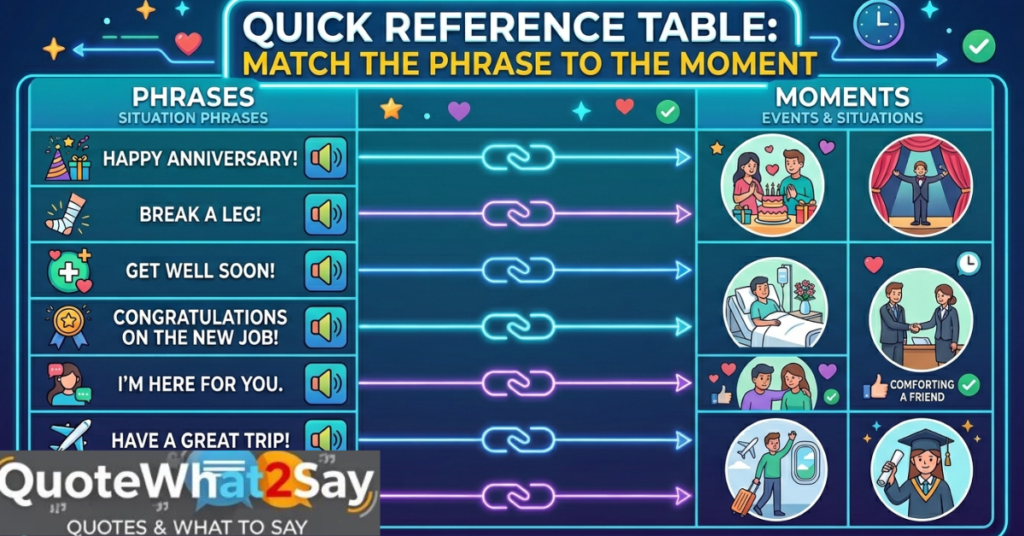
| Situation | Best Phrase to Use |
| Texting late at night | “I’d mess up my sleep schedule for you — willingly” |
| Early in a relationship | “You’re the person I text first when something funny happens” |
| Long-term partnership | “I’d rather do boring things with you than exciting things alone” |
| For a gamer | “I’d pause my game mid-boss-fight for you” |
| For a foodie | “I’d choose you over free food” |
| For an introvert | “You’re my favorite human — which is saying a lot” |
| For someone anxious | “You make my brain go completely quiet” |
| After a hard period | “You’re the reason I believe good surprises still happen” |
| Playful/funny mood | “I’d fight a goose for you — completely unprovoked” |
| Deep emotional moment | “You feel like home — the kind you actually want to come back to” |
How to Use These Phrases Without Sounding Scripted
The difference between these phrases landing beautifully and falling flat comes down to one thing: timing and delivery.
Here’s what actually works:
Say it when it’s true in that moment. Don’t pull a phrase out of thin air — wait until the feeling matches the words. If you’re mid-laugh about something and it naturally feels like “you’re my favorite chaos,” that’s the moment.
Don’t announce it. The best creative love expressions are slipped into conversation like they’re obvious. “By the way — you’re my favorite notification. Just so you know.” Then keep moving. Let it land on its own.
Make it yours. Every phrase in this list can be personalized. Add an inside joke. Reference something specific to your relationship. The more specific it is, the more it means.
Match the energy. Funny expressions work best in a light moment. Deep ones need a little space and eye contact (or a long pause in text). Read the room — even if the room is just a chat window.
Say it without needing a response. The most confident love expressions don’t demand anything back. They’re just true. You say them, you mean them, and you let the other person sit with that.
Frequently Asked Questions
Is it okay to say these to a friend, not just a romantic partner? Absolutely. Many of these — “I’m genuinely glad you exist,” “you’re my favorite human,” “you make ordinary days better” — are powerful for deep friendships. Love isn’t only romantic.
What if the other person doesn’t respond the way I hoped? Say these things because they’re true, not because you’re fishing for a reaction. The best expressions of affection are gifts — not transactions.
Are there any here that work for long-distance relationships? Yes — especially: “you’re my favorite notification,” “I’d mess up my sleep schedule for you,” “you’re who I want beside me when things get hard,” and “you’re the part of my day I actually look forward to.”
Can I use these in a card or letter? Completely. Several of these — particularly #5, #23, #28, and #50 — are especially suited to written form, where someone can read them slowly and sit with them.
Final Thoughts
“I love you” will always matter. But the moments people remember — the ones that get mentioned years later, the ones that get screenshotted and saved — are usually the unexpected ones. The ones that were funny, specific, weirdly accurate, and completely yours.
The phrases in this list aren’t replacements for those three words. They’re companions to them. Ways to say the same thing from different angles, in different lights, through humor and tenderness and specificity and absurdity.
Because that’s what love actually is — not one grand declaration, but a thousand small, creative, deliberate acts of saying: I see you. I choose you. I’m glad you’re here.
Pick one that feels right. Say it like you mean it. And let the rest take care of itself.

I’m Grace Morgan, a professional content writer with 3+ years of experience and AI content writing expertise, creating clear, engaging, and easy-to-understand content for readers.
