


Saying goodbye to a narcissist is one of the most courageous things you will ever do. It is not just leaving a person — it is walking away from a version of reality that was built to keep you confused, dependent, and stuck.
These 100+ final goodbye narcissist abuse quotes come from leading therapists, psychologists, trauma recovery authors, and real survivors. Whether you are preparing to leave, holding firm in no contact, or rebuilding yourself after the abuse — these words are here for you.
A note before you begin: these quotes are meant to validate your experience and support your healing — they’re not a substitute for professional care. If you’re in an unsafe situation or in crisis, the 988 Suicide & Crisis Lifeline (call or text 988) and the National Domestic Violence Hotline (1-800-799-7233) are available right now. If you’re working through the aftermath of narcissistic abuse, a therapist trained in trauma and betrayal-bond recovery can offer support these words alone can’t replace.
see also: Retirement Speech By a Retiree: 10 Examples on What To Write and Say
The Psychology Behind These Words
These quotes aren’t just comforting phrases — most of them point to real, documented patterns that researchers have spent decades studying.
Psychiatrist Judith Herman’s landmark 1992 book Trauma and Recovery described healing from interpersonal trauma as moving through three phases: establishing safety, mourning what was lost, and reconnecting with ordinary life. That framework still shapes how trauma-informed therapists approach recovery from narcissistic abuse today, and it’s part of why this collection is organized the way it is — no contact and safety first, then naming what happened, then rebuilding.
Psychologist Jennifer Freyd coined the term “betrayal trauma” and identified a pattern called DARVO — Deny, Attack, Reverse Victim and Offender — to describe how people who cause harm often respond when confronted: deny it happened, attack the person raising it, then claim to be the real victim. If that pattern sounds familiar, it’s not a coincidence you’re noticing. It’s a documented, well-studied tactic.
And the reason leaving often feels so much harder than it “should” has a name too: researcher Patrick Carnes’ work on trauma bonding shows that intermittent reinforcement — alternating between warmth and harm — creates a stronger psychological attachment than consistent kindness ever could. Wanting to go back isn’t a character flaw. It’s how the human brain responds to that specific pattern.
None of this makes the pain smaller. But naming the mechanism is often the first step toward trusting your own experience of it — which is exactly what the quotes in this collection are trying to do. If the patterns above show up in other relationships in your life too, not just the one you’re walking away from, this collection on recognizing toxic people covers the same warning signs across family, friendships, and work.
Final Goodbye Quotes — No Contact and Walking Away
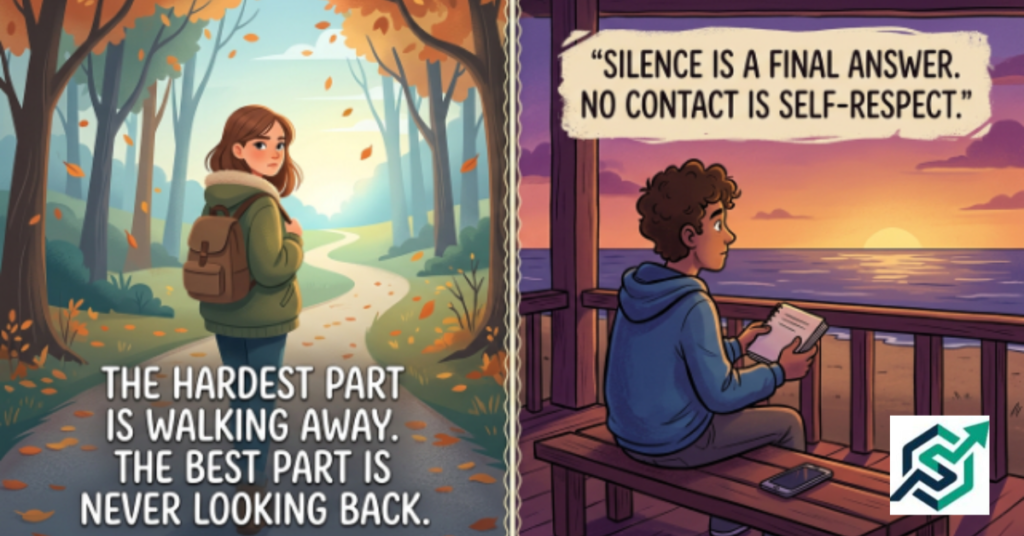
“Going no contact with a narcissist is not weakness. It is the most courageous act of self-preservation you will ever make.” — Tracy Malone, Narcissistic Abuse Recovery Expert
“No contact is not just a survival strategy. It is a declaration — to yourself and to the universe — that you are enough, and that you have finally had enough.” — Shahida Arabi, Author of Becoming the Narcissist’s Nightmare
“No contact is not cruelty. It is self-respect expressed through silence.” — Shahida Arabi
“Leaving a narcissist is not abandonment. It is self-respect in its most powerful form.” — Dana Arcuri, Certified Trauma Recovery Coach
“Sometimes the best closure you will ever receive is the closure you build for yourself — without their participation.” — Survivor Wisdom
“You do not owe anyone unlimited access to your energy — especially those who have proven they will exploit every ounce of it.” — Tracy Malone
“Trust the part of you that already knows the truth. That part never stopped whispering — even when you tried to silence it.” — Yasmine Cheyenne, Healing Educator
“You can miss who you thought they were — and still know, without any doubt, that you cannot go back.” — Survivor Wisdom
“Peace is not something they will ever give you. It arrives the moment you stop waiting for them to.” — Trauma Recovery Wisdom
“Some goodbyes do not come with explanations or final conversations. Sometimes goodbye looks like silence — and silence is enough.” — Survivor Wisdom
“The day I stopped trying to make them understand the damage they caused was the day my healing actually began.” — Dana Arcuri
“No contact is not about hating them. It is about loving yourself enough to stop accepting less than you deserve.” — Healing Community Wisdom
“Some doors need to be permanently closed — not out of anger, but out of self-preservation.” — Survivor Wisdom
“When toxic people go quiet after you set a boundary, that silence is not a punishment. It is a gift.” — Narcissistic Abuse Recovery Insight
“When a toxic person stops reaching out, remind yourself: the trash took itself out.” — Karen Salmansohn
Quotes About Recognizing Gaslighting and Emotional Manipulation
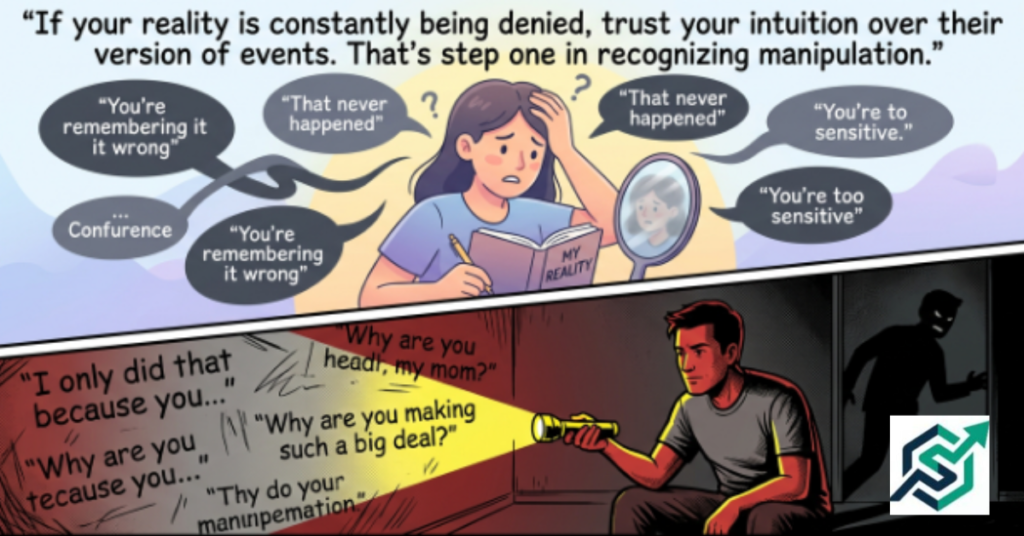
“You are not crazy. You are not too sensitive. You are someone being deliberately manipulated by a person who benefits from your self-doubt.” — Dr. George K. Simon Jr., Author of In Sheep’s Clothing
“Gaslighting is not just dishonesty. It is a calculated attack on your ability to trust your own mind.” — Dr. Stephanie Moulton Sarkis, Author of Gaslighting
“A narcissist does not just gaslight you — they slowly train you to gaslight yourself. Until their voice becomes the voice inside your own head.” — Shahida Arabi
“When they say ‘you are too sensitive,’ what they really mean is: your ability to perceive what I am doing is inconvenient for me.” — Psychological Abuse Awareness
“Narcissists destroy reputations with lies because their own lives cannot survive the truth.” — Tracy Malone
“It is not your job to prove your pain to the person who deliberately caused it.” — Survivor Wisdom
“Circular conversations, word salad, projection, and deflection are not communication failures. They are deliberate disorientation tactics.” — Shahida Arabi
“The accusation is often a confession. When a narcissist accuses you of something, look carefully — they are almost always describing themselves.” — Dr. Ramani Durvasula, Clinical Psychologist
“They rewrote history to suit their version of events — and then expected you to agree and feel grateful.” — Shahida Arabi
“Love bombing is not love. It is a calculated investment with a very specific return expected.” — Trauma Recovery Educator
“They invalidated your reality not because you were wrong — but because your being right was dangerous to their control.” — Dr. Robin Stern, Author of The Gaslight Effect
“The confusion you feel is not a character flaw. It is the intended result of sustained psychological manipulation.” — Narcissistic Abuse Psychology Insight
“Judge what people repeatedly do — not the elaborate explanations they construct for doing it.” — Dr. George K. Simon Jr.
“Narcissists are extraordinarily skilled at weaponizing your compassion, your history, and your vulnerabilities against you.” — Karyl McBride, PhD, Author of Will I Ever Be Good Enough?
“When a toxic person can no longer control you, they will try to control how others see you. Prepare for the smear campaign. It means you are becoming free.” — Jill Blakeway
Quotes About Self-Respect, Boundaries and Reclaiming Your Power
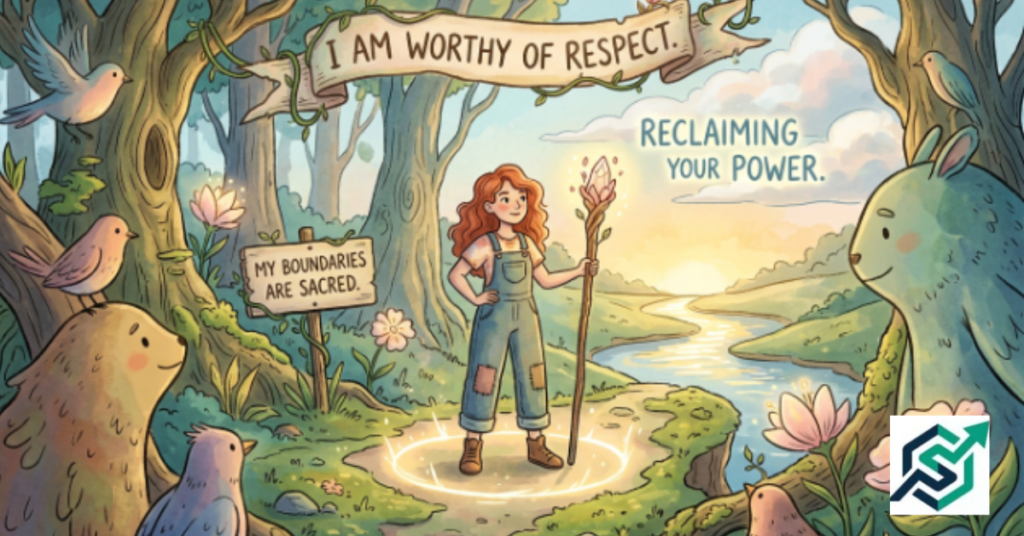
“Every time you set a healthy boundary, you rewrite the story that was told about who you are allowed to be.” — Nedra Glover Tawwab, Author of Set Boundaries, Find Peace
“A boundary is not a wall. It is the distance at which I can love you and still love myself at the same time.” — Prentis Hemphill, Somatics Educator
“To a narcissist, your boundary looks like betrayal — because your unlimited compliance was what they mistook for love.” — Dr. Ramani Durvasula
“You are not required to set yourself on fire to keep someone else warm.” — Penny Reid
“The only way to win a game designed for you to lose is to simply stop playing it.” — Dr. Rick Hanson, Neuropsychologist
“You cannot fix someone who uses your attempts to help them as new ammunition against you.” — Jackson MacKenzie, Author of Psychopath Free
“If you are always the one apologizing, always the one doing the emotional work for two — stop. It was never a partnership. It was a performance.” — Steve Maraboli
“Detachment is not indifference. It is caring about someone from a distance safe enough to also care about yourself.” — Melody Beattie, Author of Codependent No More
“We cannot rebuild relationships with people who refuse to acknowledge the damage they created. For our own mental health — we let them go.” — Dana Arcuri
“There is no healthy version of a relationship that consistently harms you.” — Dana Morningstar, Narcissistic Abuse Educator
“Start investing your energy in people who know how to return it.” — Dr. Ramani Durvasula
“Your worth was never something they got to decide. It was never up for negotiation.” — Survivor Wisdom
“Choosing yourself is not betrayal. It is the single most important thing you will ever do.” — Trauma Healing Insight
“Don’t ask why someone keeps hurting you. Ask yourself why you kept allowing it — and answer with compassion, not shame.” — Robert Tew
“A genuine relationship will never ask you to sacrifice your dignity, your friendships, or your future to survive it.” — Relationship Health Insight
Quotes That Explain Why Narcissists Never Change

“Relationships with narcissists are kept alive almost entirely by your hope for a ‘someday’ that the evidence repeatedly refuses to support.” — Dr. Ramani Durvasula
“A narcissist is like a bucket with a hole in the bottom. No matter how much love or patience you pour in — it will never be full.” — Dr. Ramani Durvasula
“Narcissists do not change because they genuinely do not want to. Their current behavior is delivering exactly what they need.” — Anne McCrea, Narcissistic Abuse Recovery Author
“There is a reason narcissists do not learn from their mistakes: they never fully accept that they made one.” — Jeffrey Kluger, TIME Magazine
“For a narcissist, saying ‘I am sorry’ feels indistinguishable from saying ‘I am worthless.’ And so — it is never truly said.” — Wendy T. Behary, LCSW, Author of Disarming the Narcissist
“The narcissist sincerely believes they are the good person in every story. That is precisely what makes them so impossible to reason with.” — Dr. Ramani Durvasula
“Stop waiting for the apology. The person who would genuinely give it would not have needed you to wait this long.” — Survivor Wisdom
“The losing battle every victim fights is attempting to hold a manipulator accountable using the same empathy the manipulator fundamentally lacks.” — Dr. George K. Simon Jr.
“There is nothing to be gained from endlessly empathizing with someone neurologically structured to deny empathy in return.” — Dr. Martha Stout, Author of The Sociopath Next Door
“They will not change. They have shown you who they are — repeatedly, consistently, and without remorse. Protect your peace.” — Melanie Tonia Evans
“Narcissists rarely change because they have never been convinced they need to. In their world, they are always the victim, the hero, and the expert — simultaneously.” — Kristen Milstead, Recovery Educator
“Withhold admiration and you become their enemy. Give it freely and you become invisible. There is no winning position.” — Mason Cooley
“The ‘someday’ you are waiting for is the hook that keeps you in the cycle. Someday is not a promise. It is a manipulation tactic.” — Narcissistic Abuse Recovery Insight
“One of the great traps: narcissistic people genuinely believe themselves to be the kind and generous ones. That is why they never see what they have truly done.” — Dr. Ramani Durvasula
Healing and Moving Forward After Narcissistic Abuse
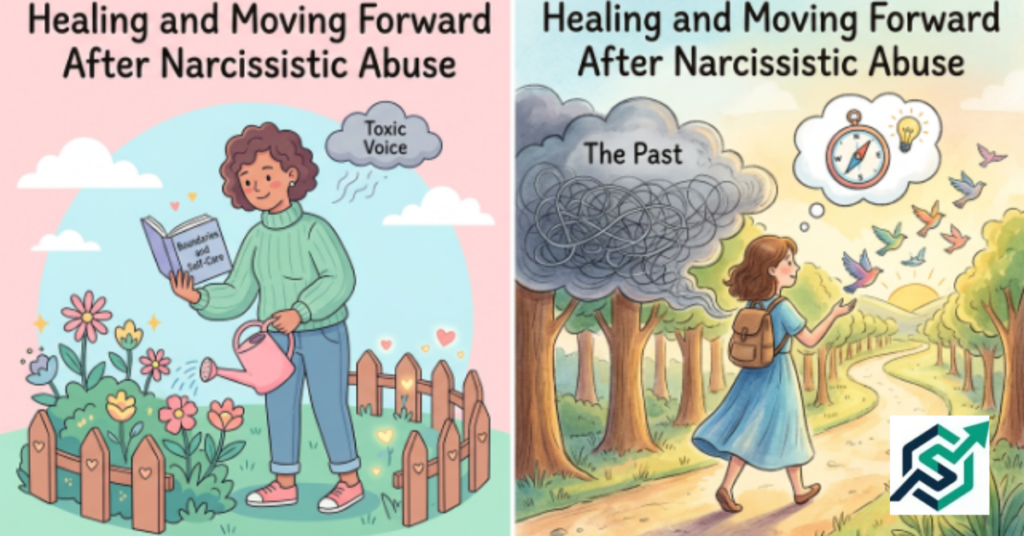
“Recovery means taking back control — detaching from your abuser, building genuine support, and reconnecting with who you were before the abuse.” — Shahida Arabi
“On the other side of a narcissistic relationship, you discover things about yourself you never would have found any other way: your values, your resilience, and the depth of your own strength.” — Shahida Arabi
“You can miss who you thought they were — and still know, with absolute clarity, that going back is not an option. Both truths coexist.” — Survivor Wisdom
“The traumatic highs and lows you experienced are not what love feels like. They are what manipulation feels like. You deserve to know the difference.” — Shahida Arabi
“Healing begins not when the pain disappears — but when you stop allowing the pain to make your decisions.” — Trauma Healing Insight
“Every day you hold no contact, your nervous system quietly begins to remember what peace feels like.” — Trauma-Informed Recovery Insight
“Remind yourself: if expressing your genuine needs consistently drives someone away, that relationship was never safe.” — Dr. Craig Malkin, Harvard Psychology Lecturer
“Narcissists make your natural reaction to abuse appear to be the problem. They make the wound look like the weapon.” — Shahida Arabi
“They mirrored your strengths to earn your trust — then weaponized your vulnerabilities once the trust was given. That is not love gone wrong. That is abuse from the start.” — Shahida Arabi
“Healing is not forgetting. It is learning to remember without bleeding.” — Trauma Recovery Community
“You survived something that was specifically designed to break you. That is not a small thing. That is everything.” — Survivor Encouragement
“When someone shows you a consistent pattern — not once, not twice, but repeatedly — believe the pattern. Not the apology.” — Survivor Wisdom
“The effects of narcissistic abuse can result in Complex PTSD — naming this is not weakness, it is the beginning of real treatment.” — Shahida Arabi
“You can only break the trauma bond by turning the love you gave so freely — and finally directing some of it toward yourself.” — Jackson MacKenzie
“Arguing with a narcissist is like being under arrest — everything you say, feel, or express will be used against you.” — Steve Maraboli
Short Goodbye Quotes for Journaling and Daily Strength

“I am not going back. Not because I stopped caring — but because I finally started caring about myself.”
“The day I stopped explaining myself to them was the day my healing found room to begin.”
“No is a complete sentence.”
“I did not lose them. I lost the illusion of them. That is not a loss — that is a liberation.”
“My peace is not available for negotiation.”
“I am not what they said I was.”
“The silence after leaving is not emptiness. It is the sound of me, becoming myself again.”
“They were a chapter. A painful one — but not the whole story.”
“I will not apologize for finally having standards.”
“My healing is not about them. It never was.”
“What they did to me is not my identity. It is my history — and I write what comes next.”
“I chose myself. That is not betrayal. That is the beginning.”
“I traded chaos for quiet. Some people call that loss. I call it the best decision I ever made.”
“Letting go was not giving up. It was finally growing toward myself.”
“I survived. I am surviving. I will thrive.”
Final Thought
Your goodbye is not an ending. It is the most important beginning you will ever write.
The road will have hard days. There will be moments of doubt, grief, and loneliness. On those days, come back to these words. Come back to the part of you that already knew the truth long before you were ready to act on it.
You chose yourself. Keep choosing.
see also: What to Say to Someone Who Failed an Exam: 120 Examples
FAQs
How do you say a final goodbye to a narcissist?
Say it once, briefly, and without over-explaining. Narcissists use emotional final conversations to reassert control and manufacture guilt. Say what you need to — or say nothing at all — then enforce strict no contact immediately.
Why is leaving a narcissist so difficult?
Trauma bonding creates a neurobiological attachment to the abuser similar to addiction. The cycle of intermittent reward and punishment keeps your nervous system craving resolution. You were not weak for staying — you were chemically and psychologically bonded.
Does no contact really work?
Yes. No contact is consistently the most recommended strategy by trauma therapists for breaking the trauma bond and allowing genuine healing to begin. It must be complete and consistent — partial contact restarts the cycle.
Will a narcissist ever change?
In rare cases, with intensive long-term therapy and genuine desire, some change is possible. In the vast majority of cases, narcissists do not change because they do not believe change is necessary.
How long does healing take?
Typically one to three or more years, depending on the length and severity of the abuse and your access to trauma-informed support. Healing is nonlinear — difficult weeks do not erase your progress.
What are the signs you are healing?
You trust your own perceptions again. You experience genuine moments of peace. You stop hoping they will change and start investing that energy in your own life. You recognize unhealthy dynamics early — because now you know exactly what they look like.

I’m Grace Morgan, a professional content writer with 3+ years of experience and AI content writing expertise, creating clear, engaging, and easy-to-understand content for readers.
